
 SUPPLIERS OF QUALITY FLAGS SINCE 2008
SUPPLIERS OF QUALITY FLAGS SINCE 2008
R295
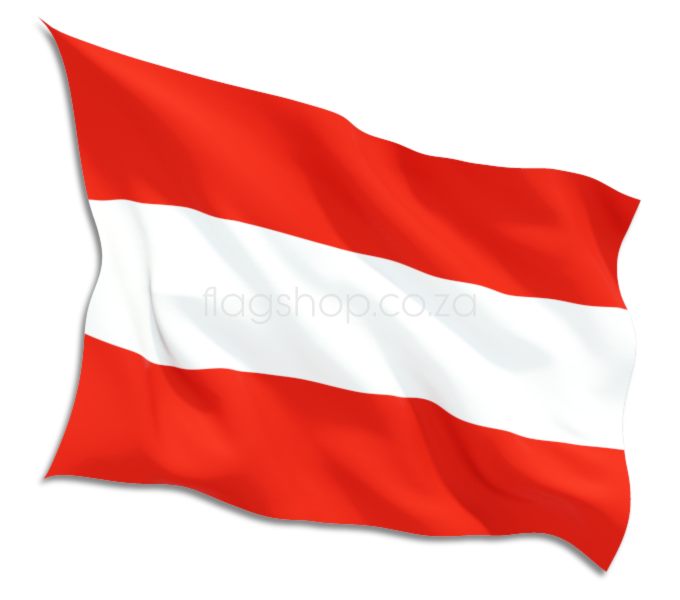
The flag of Austria has three equal horizontal bands of red (top), white, and red. The Austrian flag is the second-oldest flag in use (which has been in use since 1230) after the Danish flag (which has been in use since 1219).
• 90 x 60cm (Storm Size)
• 135 x 90cm (Universal Size)
• 180 x 120cm (Standard Size)
• 270 x 180cm (Ceremonial Size)
• Fitted with header, rope and toggle ready for hoisting
• Material: 100% Polyester Bunting (The Real Flag Material)
• Strikethrough: 97% Ink penetration resulting in a crisp mirror image on the reverse side of the flag
• Reverse Side: Mirror image of front side
Suited for conditions such as intense UV radiation, moist, salty air and high winds.
The average life expectancy of a flag is between 10 and 12 months with normal wear and tear but will differ with fluctuating weather conditions.
Taking care of your flags will prolong the lifespan and keep them looking good.
• Lower your flags at night
• Wash your flags regularly. Dirt can erode fabrics, dull the colours and cause wear
• Inspect your flags for deterioration of stitching and thread and have them repaired
• Expected delivery between 7 to 10 business days
• Free delivery for orders over R1000
Duke Frederick II (1210-1246), the last of the Babenberg dynasty, who was nicknamed the “Quarrelsome” or the “Warlike”, designed a new coat of arms in red-white-red in the year 1230 in his attempt to become more independent from the Holy Roman Empire.
According to legend, the flag was invented by Duke Leopold V of Austria (1157–1194) as a consequence of his fighting during the Crusades. After a fierce battle, his white battle dress was completely drenched in blood. When he removed his belt, the cloth underneath was untouched by it, revealing the combination of red-white-red. So taken was he by this singular sight that he adopted the colours and scheme as his banner. Wikipedia