
 SUPPLIERS OF QUALITY FLAGS SINCE 2008
SUPPLIERS OF QUALITY FLAGS SINCE 2008
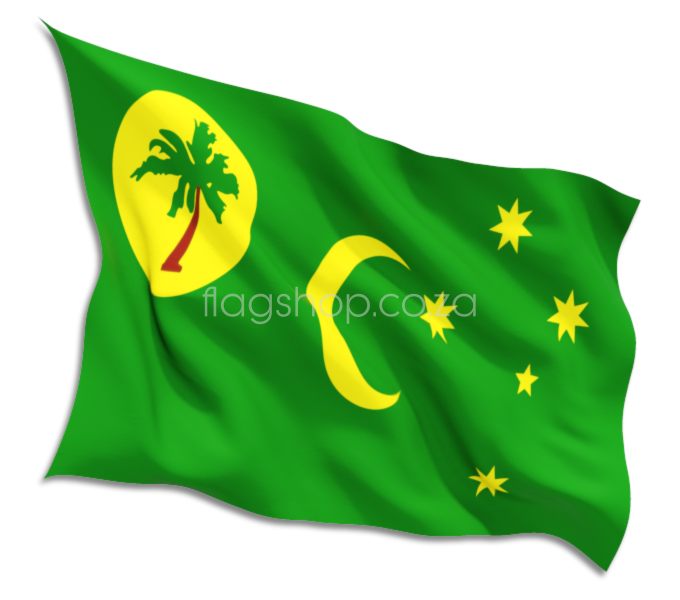
R295
The Territory of Christmas Island is an Australian external territory comprising the island of the same name.
• 90 x 60cm (Storm Size)
• 135 x 90cm (Universal Size)
• 180 x 120cm (Standard Size)
• 270 x 180cm (Ceremonial Size)
• Fitted with header, rope and toggle ready for hoisting
• Material: 100% Polyester Bunting (The Real Flag Material)
• Strikethrough: 97% Ink penetration resulting in a crisp mirror image on the reverse side of the flag
• Reverse Side: Mirror image of front side
Suited for conditions such as intense UV radiation, moist, salty air and high winds.
The average life expectancy of a flag is between 10 and 12 months with normal wear and tear but will differ with fluctuating weather conditions.
Taking care of your flags will prolong the lifespan and keep them looking good.
• Lower your flags at night
• Wash your flags regularly. Dirt can erode fabrics, dull the colours and cause wear
• Inspect your flags for deterioration of stitching and thread and have them repaired
• Expected delivery between 7 to 10 business days
• Free delivery for orders over R1000
The territory consists of two atolls made up of 27 coral islands, of which only two – West Island and Home Island – are inhabited. The population of around 600 people consists mainly of Cocos Malays, who mostly practise Sunni Islam and speak a dialect of Malay as their first language. The territory is administered by the Australian federal government's Department of Infrastructure, Transport, Regional Development and Communications as an Australian external territory and together with Christmas Island (which is about 960 kilometres (600 mi) to the east) forms the Australian Indian Ocean Territories administrative grouping. However, the islanders do have a degree of self-government through the local shire council. Many public services – including health, education, and policing – are provided by the state of Western Australia, and Western Australian law applies except where the federal government has determined otherwise. The territory also uses Western Australian postcodes.
The islands were discovered in 1609 by the British sea captain William Keeling, but no settlement occurred until the early 19th century. One of the first settlers was John Clunies-Ross, a Scottish merchant; much of the island's current population is descended from the Malay workers he brought in to work his copra plantation. The Clunies-Ross family ruled the islands as a private fiefdom for almost 150 years, with the head of the family usually recognised as resident magistrate. The British annexed the islands in 1857, and for the next century they were administered from either Ceylon or Singapore. The territory was transferred to Australia in 1955, although until 1979 virtually all of the island's real estate still belonged to the Clunies-Ross family. Wikipedia