
 SUPPLIERS OF QUALITY FLAGS SINCE 2008
SUPPLIERS OF QUALITY FLAGS SINCE 2008
R295
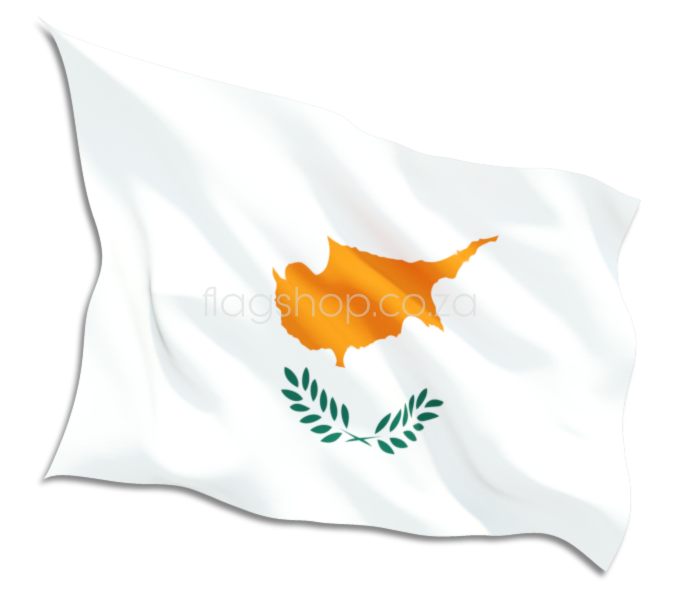
The flag of Cyprus (Greek: Σημαία της Κύπρου simea tis Kipru, Turkish: Kıbrıs Cumhuriyeti bayrağı) came into use on August 16, 1960.
• 90 x 60cm (Storm Size)
• 135 x 90cm (Universal Size)
• 180 x 120cm (Standard Size)
• 270 x 180cm (Ceremonial Size)
• Fitted with header, rope and toggle ready for hoisting
• Material: 100% Polyester Bunting (The Real Flag Material)
• Strikethrough: 97% Ink penetration resulting in a crisp mirror image on the reverse side of the flag
• Reverse Side: Mirror image of front side
Suited for conditions such as intense UV radiation, moist, salty air and high winds.
The average life expectancy of a flag is between 10 and 12 months with normal wear and tear but will differ with fluctuating weather conditions.
Taking care of your flags will prolong the lifespan and keep them looking good.
• Lower your flags at night
• Wash your flags regularly. Dirt can erode fabrics, dull the colours and cause wear
• Inspect your flags for deterioration of stitching and thread and have them repaired
• Expected delivery between 7 to 10 business days
• Free delivery for orders over R1000
Under the Zürich and London Agreements, whereby a constitution was drafted and Cyprus was proclaimed an independent state. The flag was designed by Turkish Cypriot art teacher İsmet Güney.
The state flag features a map of the entirety of the island, with two olive branches below (a symbol of peace) on white (another symbol of peace). The olive branches signify peace between the Turks and Greeks. The map on the flag is a copper-orange colour, symbolizing the large deposits of copper ore on the island (chiefly in the form of chalcopyrite, which is yellow in colour), from which it may have received its name.
The flag deliberately chose peaceful and neutral symbols in an attempt to indicate harmony between the rival Greek and Turkish communities, an ideal that has not yet been realized. In 1963 Turkish Cypriot and Greek Cypriot communities separated because of Cypriot inter communal violence. Wikipedia