
 SUPPLIERS OF QUALITY FLAGS SINCE 2008
SUPPLIERS OF QUALITY FLAGS SINCE 2008
R295
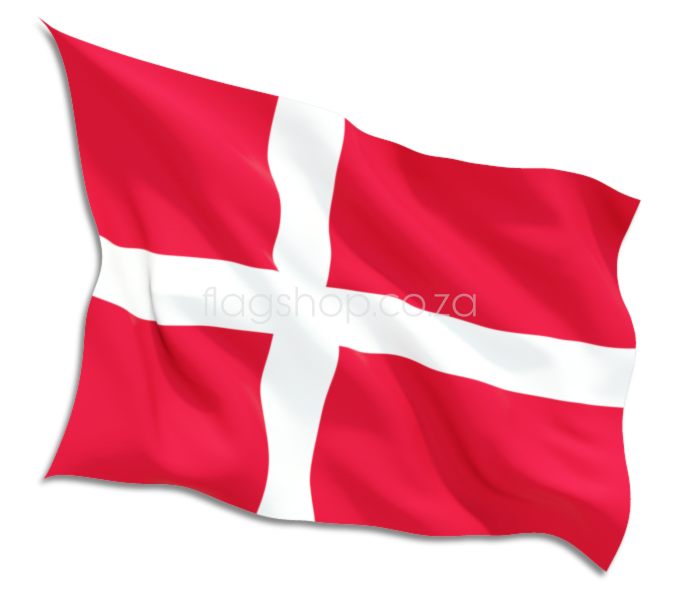
The Flag of Denmark (Danish: Dannebrog Danish pronunciation: [ˈdanəˌbʁoˀ]) is red with a white Scandinavian cross that extends to the edges of the flag.
• 90 x 60cm (Storm Size)
• 135 x 90cm (Universal Size)
• 180 x 120cm (Standard Size)
• 270 x 180cm (Ceremonial Size)
• Fitted with header, rope and toggle ready for hoisting
• Material: 100% Polyester Bunting (The Real Flag Material)
• Strikethrough: 97% Ink penetration resulting in a crisp mirror image on the reverse side of the flag
• Reverse Side: Mirror image of front side
Suited for conditions such as intense UV radiation, moist, salty air and high winds.
The average life expectancy of a flag is between 10 and 12 months with normal wear and tear but will differ with fluctuating weather conditions.
Taking care of your flags will prolong the lifespan and keep them looking good.
• Lower your flags at night
• Wash your flags regularly. Dirt can erode fabrics, dull the colours and cause wear
• Inspect your flags for deterioration of stitching and thread and have them repaired
• Expected delivery between 7 to 10 business days
• Free delivery for orders over R1000
In the flag of Denmark, the vertical part of the cross is shifted to the hoist side. The cross design, which represents Christianity, was subsequently adopted by the other Nordic countries; Sweden, Norway, Finland, Iceland, Åland Islands and the Faroe Islands, as well as the Scottish archipelagos of Shetland and Orkney. During the Danish-Norwegian personal union, Dannebrog (“Danish cloth”) was also the flag of Norway and continued to be, with slight modifications, until Norway adopted its current flag in 1821.
Because of its legendary origin in the 13th century, the Guinness World Records (2010) dubbed the Dannebrog the “oldest state flag” in the world still in use by a nation. According to legend, the flag came into Danish possession during the Battle of Lyndanisse in 1219. The Danes were on a failing crusade in Estonia, but after praying to God a flag fell from the sky. After this event, Danish King Valdemar II went on to defeat the Estonians. The first recorded uses of the flag appear some one hundred years later. Wikipedia