
 SUPPLIERS OF QUALITY FLAGS SINCE 2008
SUPPLIERS OF QUALITY FLAGS SINCE 2008
R295
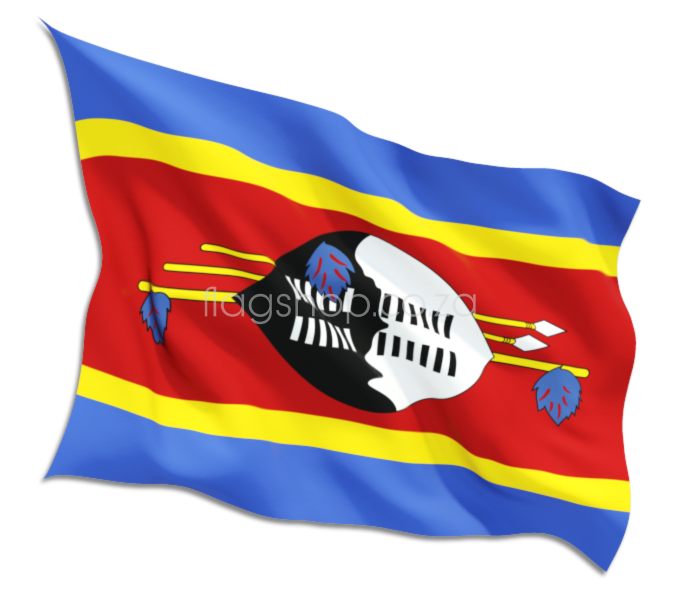
The flag of Eswatini (Swaziland) was adopted on October 6, 1968.
• 90 x 60cm (Storm Size)
• 135 x 90cm (Universal Size)
• 180 x 120cm (Standard Size)
• 270 x 180cm (Ceremonial Size)
• Fitted with header, rope and toggle ready for hoisting
• Material: 100% Polyester Bunting (The Real Flag Material)
• Strikethrough: 97% Ink penetration resulting in a crisp mirror image on the reverse side of the flag
• Reverse Side: Mirror image of front side
Suited for conditions such as intense UV radiation, moist, salty air and high winds.
The average life expectancy of a flag is between 10 and 12 months with normal wear and tear but will differ with fluctuating weather conditions.
Taking care of your flags will prolong the lifespan and keep them looking good.
• Lower your flags at night
• Wash your flags regularly. Dirt can erode fabrics, dull the colours and cause wear
• Inspect your flags for deterioration of stitching and thread and have them repaired
• Expected delivery between 7 to 10 business days
• Free delivery for orders over R1000
The flag is based on the military flag given by King Sobhuza II to the Swazi Pioneer Corps in 1941 to remind them of the nation's military traditions. On 25 April 1967, the day the pledge of oath was taken by the king the flag was hoisted for the first time. The College of Arms in London registered the flag on 30 October 1967. The first official hoisting of the flag was conducted on this day.
The flag is rectangular with length and breadth in a ratio of 3:2 respectively. The red stands for past battles, the blue for peace and stability, and the yellow for the resources of Swaziland. The central focus of the flag is a Nguni shield and two spears, symbolizing protection from the country's enemies. Its colour is meant to show that white and black people live in peaceful coexistence in Swaziland. The flag has five horizontal stripes—two blue stripes at the top and bottom while the centre stripe is red. Two thin yellow stripes border the red stripe. On the red stripe is an ox hide combat shield from the traditional Swazi Emasotsha Regiment, laid horizontally. The shield is reinforced by a staff from which hangs injobo tassels-bunches of feathers of the widowbird and the lourie. They also decorate the shield. These feathers are used only by the king. Above the staff are two assegais-local spears, a Swazi fighting stick and three royal Swazi ornamental tassels called tinjobo, which are made from widow bird and loury feathers Wikipedia