
 SUPPLIERS OF QUALITY FLAGS SINCE 2008
SUPPLIERS OF QUALITY FLAGS SINCE 2008
R295
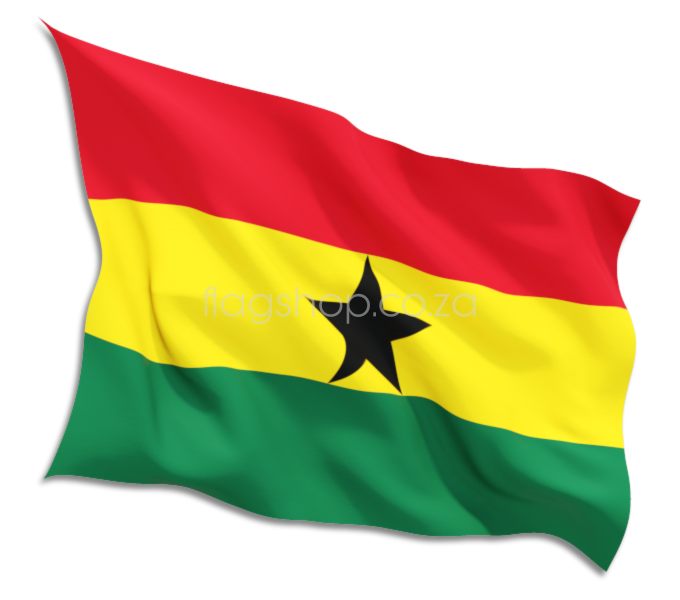
The flag of Ghana was designed by Mrs. Theodosia Okoh to replace the flag of the United Kingdom upon attainment of independence in 1957.
• 90 x 60cm (Storm Size)
• 135 x 90cm (Universal Size)
• 180 x 120cm (Standard Size)
• 270 x 180cm (Ceremonial Size)
• Fitted with header, rope and toggle ready for hoisting
• Material: 100% Polyester Bunting (The Real Flag Material)
• Strikethrough: 97% Ink penetration resulting in a crisp mirror image on the reverse side of the flag
• Reverse Side: Mirror image of front side
Suited for conditions such as intense UV radiation, moist, salty air and high winds.
The average life expectancy of a flag is between 10 and 12 months with normal wear and tear but will differ with fluctuating weather conditions.
Taking care of your flags will prolong the lifespan and keep them looking good.
• Lower your flags at night
• Wash your flags regularly. Dirt can erode fabrics, dull the colours and cause wear
• Inspect your flags for deterioration of stitching and thread and have them repaired
• Expected delivery between 7 to 10 business days
• Free delivery for orders over R1000
The Ghana flag was flown until 1959, and then reinstated in 1966. It consists of the Pan-African colours of red, yellow, and green, in horizontal stripes, with a black five-pointed star in the centre of the gold stripe. The Ghanaian flag was the first African flag after the flag of Ethiopia to feature these colours.
The red represents the blood of those who died in the country’s struggle for independence, the gold represents the mineral wealth of the country, the green symbolises the country’s rich forests and natural wealth, and the black star stands for the lodestar of African freedom. The black star was adopted from the flag of the Black Star Line, a shipping line incorporated by Marcus Garvey that operated from 1919 to 1922 and gives the Ghana national football team their nickname, the Black Stars. Wikipedia