
 SUPPLIERS OF QUALITY FLAGS SINCE 2008
SUPPLIERS OF QUALITY FLAGS SINCE 2008
R295
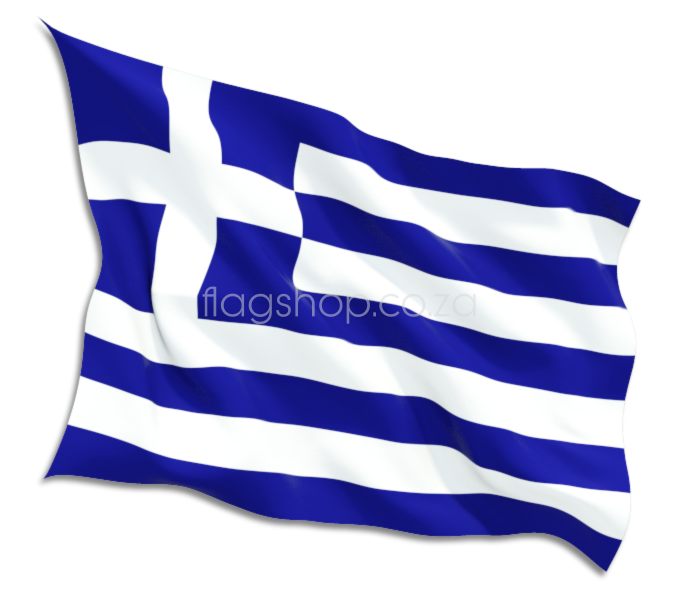
The flag of Greece (popularly referred to as the galanolefki or the kianolefki, the “blue-white”), officially recognized by Greece as one of its national symbols, is based on nine equal horizontal stripes of blue alternating with white.
• 90 x 60cm (Storm Size)
• 135 x 90cm (Universal Size)
• 180 x 120cm (Standard Size)
• 270 x 180cm (Ceremonial Size)
• Fitted with header, rope and toggle ready for hoisting
• Material: 100% Polyester Bunting (The Real Flag Material)
• Strikethrough: 97% Ink penetration resulting in a crisp mirror image on the reverse side of the flag
• Reverse Side: Mirror image of front side
Suited for conditions such as intense UV radiation, moist, salty air and high winds.
The average life expectancy of a flag is between 10 and 12 months with normal wear and tear but will differ with fluctuating weather conditions.
Taking care of your flags will prolong the lifespan and keep them looking good.
• Lower your flags at night
• Wash your flags regularly. Dirt can erode fabrics, dull the colours and cause wear
• Inspect your flags for deterioration of stitching and thread and have them repaired
• Expected delivery between 7 to 10 business days
• Free delivery for orders over R1000
There is a blue canton in the upper hoist-side corner bearing a white cross; the cross symbolizes Greek Orthodoxy, the established religion of the people of Greece and Greek Cypriots. According to popular tradition, the nine stripes represent the nine syllables of the phrase “Ελευθερία ή Θάνατος” (“Freedom or Death”, ” E-lef-the-ri-a i Tha-na-tos“), the five blue stripes for the syllables “Έλευθερία” and the four white stripes “ή Θάνατος”. The nine stripes are also said to represent the letters of the word “freedom” (Greek: Ελευθερία). There is also a different theory, that the nine stripes symbolize the nine Muses, the goddesses of art and civilization (nine has traditionally been one of the numbers of reference for the Greeks).
The blazon of the Greek flag is Azure, four bars Argent; on a canton of the field a Greek cross throughout of the second. The shade of blue used in the flag has varied throughout its history, from light blue to dark blue, the latter being increasingly used since the late 1960s.
The above patterns were officially adopted by the First National Assembly at Epidaurus on 13 January 1822. Blue and white have many interpretations, symbolizing the colours of the famed Greek sky and sea (combined with the white clouds and waves), traditional colours of Greek clothes in the islands and the mainland, etc. Wikipedia