
 SUPPLIERS OF QUALITY FLAGS SINCE 2008
SUPPLIERS OF QUALITY FLAGS SINCE 2008
R295
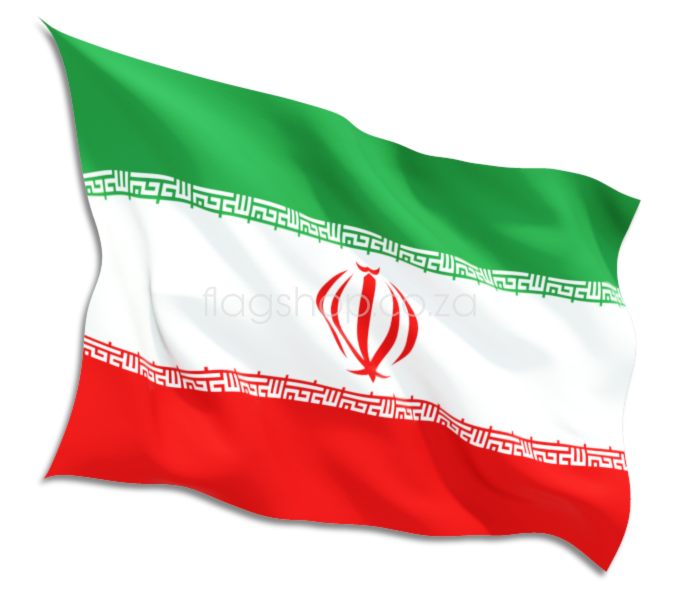
The current flag of Iran (Persian: پرچم ایران parçam-e irân) was adopted on 29 July 1980, and is a reflection of the changes brought about by the Iranian Revolution.
• 90 x 60cm (Storm Size)
• 135 x 90cm (Universal Size)
• 180 x 120cm (Standard Size)
• 270 x 180cm (Ceremonial Size)
• Fitted with header, rope and toggle ready for hoisting
• Material: 100% Polyester Bunting (The Real Flag Material)
• Strikethrough: 97% Ink penetration resulting in a crisp mirror image on the reverse side of the flag
• Reverse Side: Mirror image of front side
Suited for conditions such as intense UV radiation, moist, salty air and high winds.
The average life expectancy of a flag is between 10 and 12 months with normal wear and tear but will differ with fluctuating weather conditions.
Taking care of your flags will prolong the lifespan and keep them looking good.
• Lower your flags at night
• Wash your flags regularly. Dirt can erode fabrics, dull the colours and cause wear
• Inspect your flags for deterioration of stitching and thread and have them repaired
• Expected delivery between 7 to 10 business days
• Free delivery for orders over R1000
Its field is a tricolour comprising equal horizontal bands of green, white, and red. The red emblem in the centre of the flag, designed by Hamid Nadimi, is a highly stylized composite of various Islamic elements: a geometrically symmetric form of the word Allah (“God”) and overlapping parts of the phrase La ilaha illa Allah(“There is no god but Allah”), forming a monogram in the form of a tulip. Written in white on the inner edges of the green and red bands is the repeated phraseAllahu Akbar (“God is great”) in a stylized version of the Kufic script used for the Qur’an. This writing renders the flag non-reversible.
Physical requirements for the Iranian flag, the exact shape of the emblem, and a compass-and-straightedge construction are described in the national Iranian standard. Wikipedia