
 SUPPLIERS OF QUALITY FLAGS SINCE 2008
SUPPLIERS OF QUALITY FLAGS SINCE 2008
R295
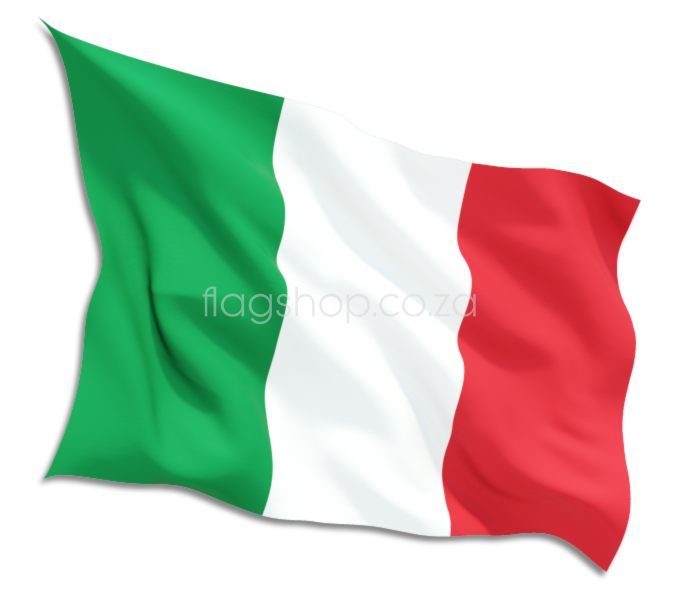
The flag of Italy (bandiera d’Italia, often referred to in Italian as il Tricolore) is a tricolour featuring three equally sized vertical pales of green, white, and red, with the green at the hoist side.
• 90 x 60cm (Storm Size)
• 135 x 90cm (Universal Size)
• 180 x 120cm (Standard Size)
• 270 x 180cm (Ceremonial Size)
• Fitted with header, rope and toggle ready for hoisting
• Material: 100% Polyester Bunting (The Real Flag Material)
• Strikethrough: 97% Ink penetration resulting in a crisp mirror image on the reverse side of the flag
• Reverse Side: Mirror image of front side
Suited for conditions such as intense UV radiation, moist, salty air and high winds.
The average life expectancy of a flag is between 10 and 12 months with normal wear and tear but will differ with fluctuating weather conditions.
Taking care of your flags will prolong the lifespan and keep them looking good.
• Lower your flags at night
• Wash your flags regularly. Dirt can erode fabrics, dull the colours and cause wear
• Inspect your flags for deterioration of stitching and thread and have them repaired
• Expected delivery between 7 to 10 business days
• Free delivery for orders over R1000
The Italian flag’s current form has been in use since 19 June 1946 and was formally adopted on 1 January 1948.
The first entity to use the Italian tricolour was the Cispadane Republic in 1797, after Napoleon’s victorious army crossed Italy. During this time many small republics of Jacobin inspiration supplanted the ancient absolute states and almost all, with variants of colour, used flags characterised by three bands of equal size, clearly inspired by the French model of 1790. The colours chosen by the Republic were red and white, the colours of the flag of Milan, and green, which was the colour of the uniform of the Milanese civic guard.
Some have attributed particular values to the colours, and a common interpretation is that the green represents the country’s plains and the hills; white, the snow-capped Alps; and red, blood spilt in the Wars of Italian Independence. A more religious interpretation is that the green represents hope, the white represents faith, and the red represents charity; this references the three theological virtues. Wikipedia