
 SUPPLIERS OF QUALITY FLAGS SINCE 2008
SUPPLIERS OF QUALITY FLAGS SINCE 2008
R295
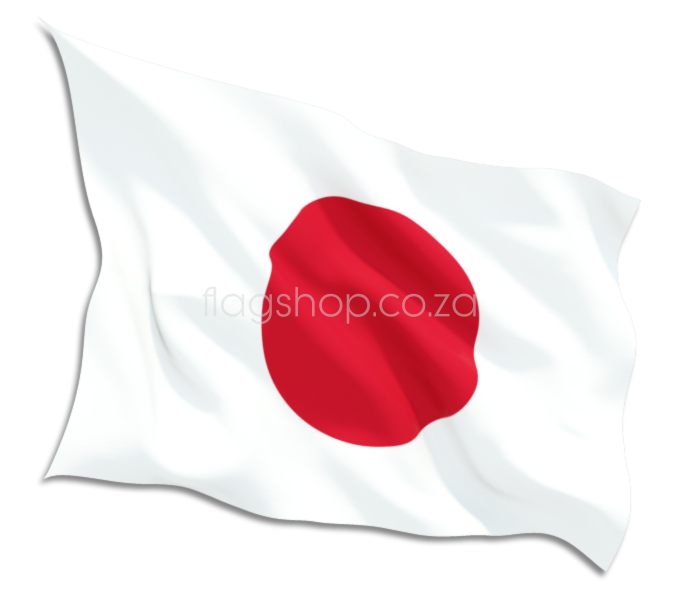
The national flag of Japan is a white rectangular flag with a large red disk (representing the sun) in the centre.
• 90 x 60cm (Storm Size)
• 135 x 90cm (Universal Size)
• 180 x 120cm (Standard Size)
• 270 x 180cm (Ceremonial Size)
• Fitted with header, rope and toggle ready for hoisting
• Material: 100% Polyester Bunting (The Real Flag Material)
• Strikethrough: 97% Ink penetration resulting in a crisp mirror image on the reverse side of the flag
• Reverse Side: Mirror image of front side
Suited for conditions such as intense UV radiation, moist, salty air and high winds.
The average life expectancy of a flag is between 10 and 12 months with normal wear and tear but will differ with fluctuating weather conditions.
Taking care of your flags will prolong the lifespan and keep them looking good.
• Lower your flags at night
• Wash your flags regularly. Dirt can erode fabrics, dull the colours and cause wear
• Inspect your flags for deterioration of stitching and thread and have them repaired
• Expected delivery between 7 to 10 business days
• Free delivery for orders over R1000
The Japanese flag is officially called Nisshōki (日章旗, “sun-mark flag”) in Japanese, but is more commonly known as Hinomaru (日の丸, “circle of the sun”).
The Nisshōki flag is designated as the national flag in Law Regarding the National Flag and National Anthem, which was promulgated and became effective on August 13, 1999. Although no earlier legislation had specified a national flag, the sun-disc flag had already become thede facto national flag of Japan. Two proclamations issued in 1870 by the Daijō-kan, the governmental body of the early Meiji Era, each had a provision for a design of the national flag. A sun-disc flag was adopted as the national flag for merchant ships under Proclamation No. 57 of Meiji 3 (issued on February 27, 1870), and as the national flag used by the Navy under Proclamation No. 651 of Meiji 3 (issued on October 27, 1870). Use of the Hinomaru was severely restricted during the early years of the American occupation after World War II, although restrictions were later relaxed. Wikipedia