
 SUPPLIERS OF QUALITY FLAGS SINCE 2008
SUPPLIERS OF QUALITY FLAGS SINCE 2008
R295
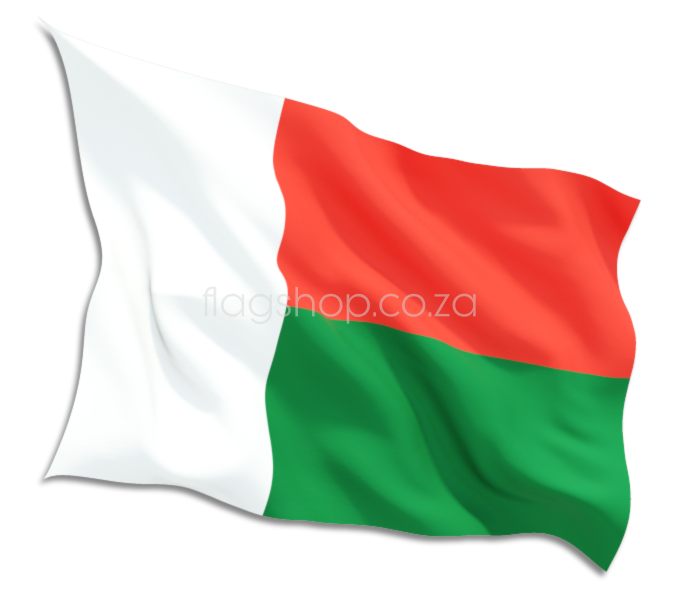
The flag of Madagascar was adopted on 14 October 1958, two years before the independence of that nation, as Madagascar prepared for a referendum on its status in the French Community.
• 90 x 60cm (Storm Size)
• 135 x 90cm (Universal Size)
• 180 x 120cm (Standard Size)
• 270 x 180cm (Ceremonial Size)
• Fitted with header, rope and toggle ready for hoisting
• Material: 100% Polyester Bunting (The Real Flag Material)
• Strikethrough: 97% Ink penetration resulting in a crisp mirror image on the reverse side of the flag
• Reverse Side: Mirror image of front side
Suited for conditions such as intense UV radiation, moist, salty air and high winds.
The average life expectancy of a flag is between 10 and 12 months with normal wear and tear but will differ with fluctuating weather conditions.
Taking care of your flags will prolong the lifespan and keep them looking good.
• Lower your flags at night
• Wash your flags regularly. Dirt can erode fabrics, dull the colours and cause wear
• Inspect your flags for deterioration of stitching and thread and have them repaired
• Expected delivery between 7 to 10 business days
• Free delivery for orders over R1000
The colours of the flag of Madagascar represent Madagascar’s history, yearning for independence, and traditional classes. Red and white were the colours of the Merina kingdom, which succumbed to France in 1896. They were used in the flag of the last Merina monarch, Queen Ranavalona III. They may indicate the ethnic origins of the Malagasy people in Southeast Asia, and are shared by the flag of Indonesia. Green was the colour of the Hova, the largest class of peasant commoners, who played a significant role in anti-French agitation and the independence movement. Wikipedia