
 SUPPLIERS OF QUALITY FLAGS SINCE 2008
SUPPLIERS OF QUALITY FLAGS SINCE 2008
R295
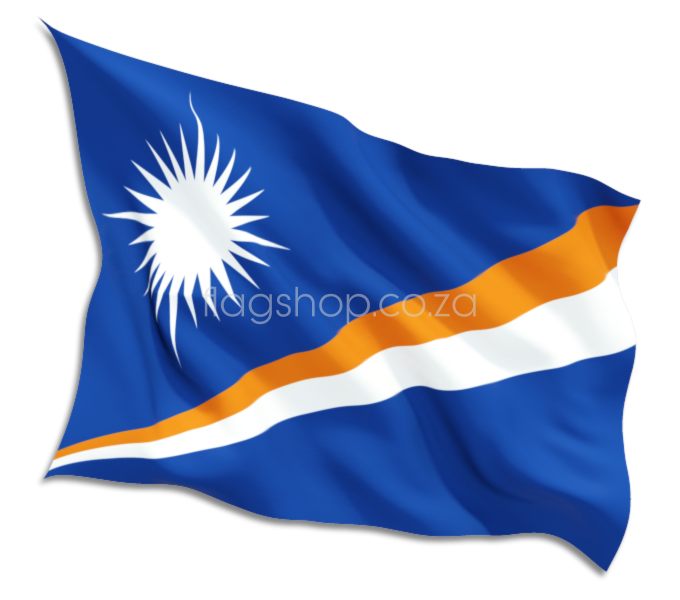
The flag of the Marshall Islands, an island nation in the Pacific, was adopted upon the start of self-governance, May 1, 1979.
• 90 x 60cm (Storm Size)
• 135 x 90cm (Universal Size)
• 180 x 120cm (Standard Size)
• 270 x 180cm (Ceremonial Size)
• Fitted with header, rope and toggle ready for hoisting
• Material: 100% Polyester Bunting (The Real Flag Material)
• Strikethrough: 97% Ink penetration resulting in a crisp mirror image on the reverse side of the flag
• Reverse Side: Mirror image of front side
Suited for conditions such as intense UV radiation, moist, salty air and high winds.
The average life expectancy of a flag is between 10 and 12 months with normal wear and tear but will differ with fluctuating weather conditions.
Taking care of your flags will prolong the lifespan and keep them looking good.
• Lower your flags at night
• Wash your flags regularly. Dirt can erode fabrics, dull the colours and cause wear
• Inspect your flags for deterioration of stitching and thread and have them repaired
• Expected delivery between 7 to 10 business days
• Free delivery for orders over R1000
The Marshall Islands were part of the Trust Territory of the Pacific Islands administered by the United States, from which the Marshall Islands and Micronesia split. In common with other island nations in the region, the Marshall Islands flag features the symbolic representation of the islands’ place within the ocean. The rising diagonal band represents the equator, the star above representing this Northern Hemisphere archipelago. The white and orange portions of the band represent, respectively, the Ratak Chain (“sunrise”) and the Ralik Chain (“sunset”), as well as symbolizing peace and courage. The star’s 24 points represent the number of electoral districts, while the four elongated points represent the principal cultural centres of Majuro, Jaluit, Wotje and Ebeye. Wikipedia