
 SUPPLIERS OF QUALITY FLAGS SINCE 2008
SUPPLIERS OF QUALITY FLAGS SINCE 2008
R295
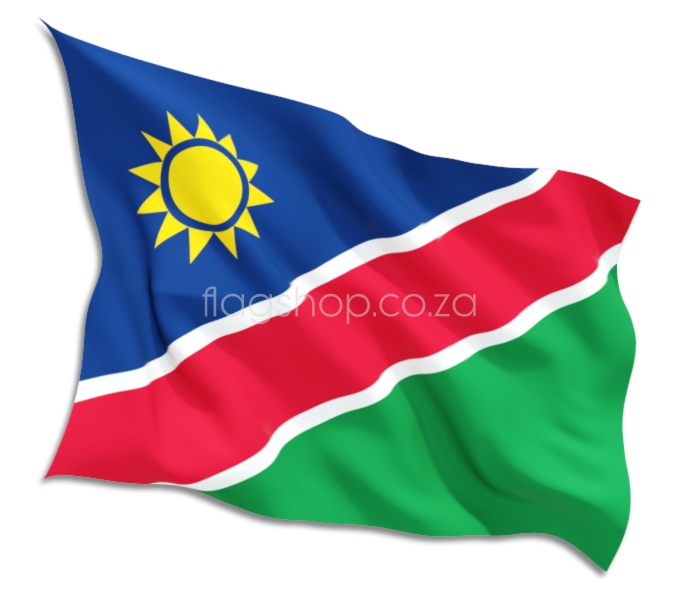
The flag of Namibia was adopted on March 21, 1990 upon independence from South Africa.
• 90 x 60cm (Storm Size)
• 135 x 90cm (Universal Size)
• 180 x 120cm (Standard Size)
• 270 x 180cm (Ceremonial Size)
• Fitted with header, rope and toggle ready for hoisting
• Material: 100% Polyester Bunting (The Real Flag Material)
• Strikethrough: 97% Ink penetration resulting in a crisp mirror image on the reverse side of the flag
• Reverse Side: Mirror image of front side
Suited for conditions such as intense UV radiation, moist, salty air and high winds.
The average life expectancy of a flag is between 10 and 12 months with normal wear and tear but will differ with fluctuating weather conditions.
Taking care of your flags will prolong the lifespan and keep them looking good.
• Lower your flags at night
• Wash your flags regularly. Dirt can erode fabrics, dull the colours and cause wear
• Inspect your flags for deterioration of stitching and thread and have them repaired
• Expected delivery between 7 to 10 business days
• Free delivery for orders over R1000
The main colours of the Namibian Flag were taken from the flag of the South West Africa People’s Organization (SWAPO), the most important liberation movement in Namibia. That flag was adopted in 1971 and comprises diagonal stripes of blue-red-green, the most important colours of the Ovambos, the largest ethnic group in the country. The flag also represents the Democratic Turnhalle Alliance, another Namibian political party. The gold sun, which is similar to the national emblem of the Republic of China, represents life and energy.
The chairman of the subcommittee that chose the flag—after a competition for which 850 designs were submitted—has also explained the symbolism of the flag’s colours:
• Red – represents Namibia’s most important resource, its people. It refers to their heroism and their determination to build a future of equal opportunity for all.
• White – refers to peace and unity.
• Green – symbolises vegetation and agricultural resources.
• Blue – represents the clear Namibian sky and the Atlantic Ocean, the country’s precious water resources and rain.
Red, white, and blue were the colours of the Democratic Turnhalle Alliance, and blue, red, and green, the colours of SWAPO. Wikipedia