
 SUPPLIERS OF QUALITY FLAGS SINCE 2008
SUPPLIERS OF QUALITY FLAGS SINCE 2008
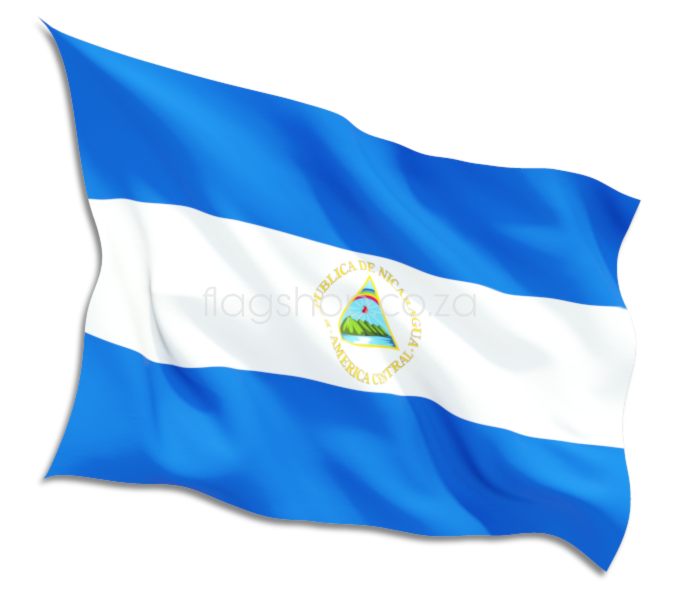
R295
The flag of Nicaragua was officially adopted on August 27, 1971. It is based on the flag of the United States of Central America and inspired by the Argentine flag.
• 90 x 60cm (Storm Size)
• 135 x 90cm (Universal Size)
• 180 x 120cm (Standard Size)
• 270 x 180cm (Ceremonial Size)
• Fitted with header, rope and toggle ready for hoisting
• Material: 100% Polyester Bunting (The Real Flag Material)
• Strikethrough: 97% Ink penetration resulting in a crisp mirror image on the reverse side of the flag
• Reverse Side: Mirror image of front side
Suited for conditions such as intense UV radiation, moist, salty air and high winds.
The average life expectancy of a flag is between 10 and 12 months with normal wear and tear but will differ with fluctuating weather conditions.
Taking care of your flags will prolong the lifespan and keep them looking good.
• Lower your flags at night
• Wash your flags regularly. Dirt can erode fabrics, dull the colours and cause wear
• Inspect your flags for deterioration of stitching and thread and have them repaired
• Expected delivery between 7 to 10 business days
• Free delivery for orders over R1000
The flag and the arms of Nicaragua in use today are the most similar to those used by the United Provinces of Central America. The triangle, volcanoes, rising sun, Cap of Liberty, and rainbow all appeared on the original emblem. The coat of arms used today contains the name of the state, Republica de Nicaragua, whereas in 1823 the title was Provincias Unidas del Centro de America. The decision to revert to the emblems used by the United Provinces of Central America was taken in 1908 and reflected Nicaragua’s aspirations for the rebirth of the political entity formed by the 5 nations. Except for the text around the arms, the flag is very similar to that of the United Provinces of Central America. The 5 volcanoes represent the original 5 member states, the Cap of Liberty represents national freedom, and the rays of the sun and the rainbow are symbolic of the bright future. Wikipedia