
 SUPPLIERS OF QUALITY FLAGS SINCE 2008
SUPPLIERS OF QUALITY FLAGS SINCE 2008
R295
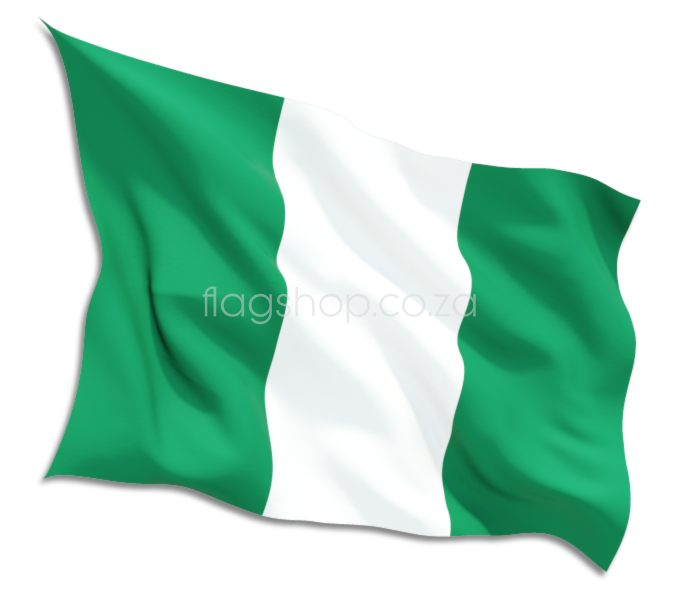
The Flag of Nigeria was designed in 1959 and first officially hoisted on October 1, 1960.
• 90 x 60cm (Storm Size)
• 135 x 90cm (Universal Size)
• 180 x 120cm (Standard Size)
• 270 x 180cm (Ceremonial Size)
• Fitted with header, rope and toggle ready for hoisting
• Material: 100% Polyester Bunting (The Real Flag Material)
• Strikethrough: 97% Ink penetration resulting in a crisp mirror image on the reverse side of the flag
• Reverse Side: Mirror image of front side
Suited for conditions such as intense UV radiation, moist, salty air and high winds.
The average life expectancy of a flag is between 10 and 12 months with normal wear and tear but will differ with fluctuating weather conditions.
Taking care of your flags will prolong the lifespan and keep them looking good.
• Lower your flags at night
• Wash your flags regularly. Dirt can erode fabrics, dull the colours and cause wear
• Inspect your flags for deterioration of stitching and thread and have them repaired
• Expected delivery between 7 to 10 business days
• Free delivery for orders over R1000
The two unique sea-green bands on the Nigerian flag represent the forests and abundant natural wealth of Nigeria while the white band represents peace.
The national flag is an adaptation of the winning entry in a competition held in 1959. The original had a red sun with streaming rays placed at the top of the white stripe. This was removed by the judges and the flag has not been altered since. Like other countries, Nigeria has special ensigns for civil and naval vessels. Some of its states also have flags. The designer of the national flag was a student, Michael Taiwo Akinkunmi. He hailed from Owu in Abeokuta, Ogun State was a student of Norwich Technical College, England when he saw the advertisement in the national daily that entries were being accepted for the design of a new National Flag. Akinkunmi quickly prepared his entry and sent it to Lagos where it was eventually picked in 1958 as the best and the flag was used to celebrate an independent Nigeria on October 1, 1960; when the Union Flag (Flag of the United Kingdom of Great Britain and Northern Ireland) was lowered for the Nigeria Flag to take its place on the flagpole.
Akinkunmi has received numerous awards from both individuals and organisations, and presently lives in Ibadan. Wikipedia