
 SUPPLIERS OF QUALITY FLAGS SINCE 2008
SUPPLIERS OF QUALITY FLAGS SINCE 2008
R295
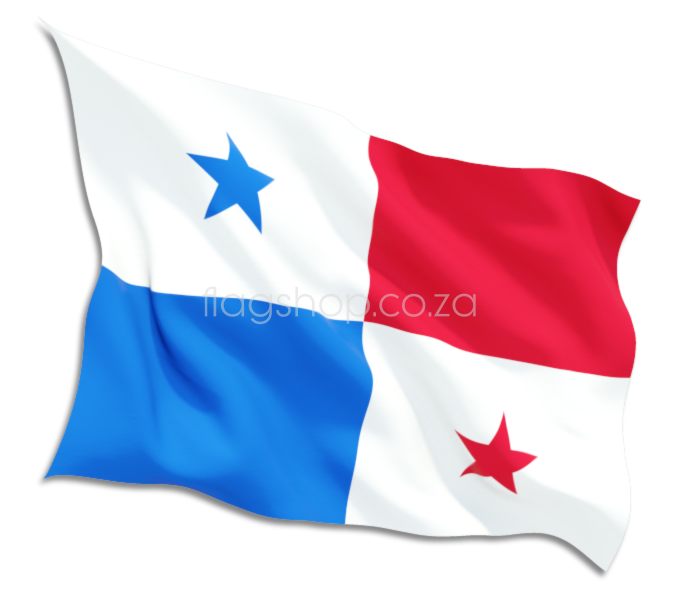
The flag of Panama was made by Maria Ossa de Amador. It has been officially adopted by the “ley 48 de 1925”; the flag is celebrated on November 4, one day after Panamanian independence from Colombia.
• 90 x 60cm (Storm Size)
• 135 x 90cm (Universal Size)
• 180 x 120cm (Standard Size)
• 270 x 180cm (Ceremonial Size)
• Fitted with header, rope and toggle ready for hoisting
• Material: 100% Polyester Bunting (The Real Flag Material)
• Strikethrough: 97% Ink penetration resulting in a crisp mirror image on the reverse side of the flag
• Reverse Side: Mirror image of front side
Suited for conditions such as intense UV radiation, moist, salty air and high winds.
The average life expectancy of a flag is between 10 and 12 months with normal wear and tear but will differ with fluctuating weather conditions.
Taking care of your flags will prolong the lifespan and keep them looking good.
• Lower your flags at night
• Wash your flags regularly. Dirt can erode fabrics, dull the colours and cause wear
• Inspect your flags for deterioration of stitching and thread and have them repaired
• Expected delivery between 7 to 10 business days
• Free delivery for orders over R1000
The first flag of Panama proposed in 1823 consisted of 7 horizontal stripes of red and yellow, with a blue canton containing 2 golden suns, joined by a narrow line to depict the oceans to be united by the Panama Canal (see the depiction below). However, this was not accepted by the Panamanian leader, Manuel Amador Guerrero, whose family designed a new flag.
The stars and quarters are said to stand for the rival political parties, and the white for the peace in which they operate. Blue was the colour of the Conservatives, and red the colour of the Liberals.
The current Panamanian flag was made by Maria Ossa de Amador on November 1, 1903. The son of Manuel Amador Guerrero, generally recognized as a skilful drawer, sketched the flag and showed it to Maria Ossa de Amador, who, after much difficulty in avoiding the Colombian army, eventually produced three copies of the flag, which were all eventually flown in Panama City upon independence, and distributed widely. Wikipedia