
 SUPPLIERS OF QUALITY FLAGS SINCE 2008
SUPPLIERS OF QUALITY FLAGS SINCE 2008
R295
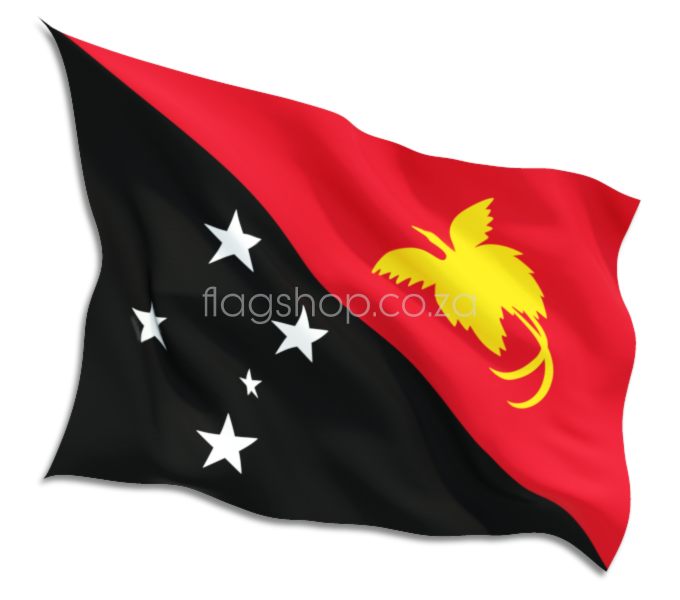
The flag of Papua New Guinea was adopted on July 1, 1971. In the hoist, it depicts the Southern Cross; in the fly, a raggiana bird of paradise is silhouetted.
• 90 x 60cm (Storm Size)
• 135 x 90cm (Universal Size)
• 180 x 120cm (Standard Size)
• 270 x 180cm (Ceremonial Size)
• Fitted with header, rope and toggle ready for hoisting
• Material: 100% Polyester Bunting (The Real Flag Material)
• Strikethrough: 97% Ink penetration resulting in a crisp mirror image on the reverse side of the flag
• Reverse Side: Mirror image of front side
Suited for conditions such as intense UV radiation, moist, salty air and high winds.
The average life expectancy of a flag is between 10 and 12 months with normal wear and tear but will differ with fluctuating weather conditions.
Taking care of your flags will prolong the lifespan and keep them looking good.
• Lower your flags at night
• Wash your flags regularly. Dirt can erode fabrics, dull the colours and cause wear
• Inspect your flags for deterioration of stitching and thread and have them repaired
• Expected delivery between 7 to 10 business days
• Free delivery for orders over R1000
The designer of the Papua New Guinea flag was 15 year old schoolgirl Susan Huhume who won a nationwide competition for a new flag design in 1971.
Red and black have long been traditional colours of many Papua New Guinean tribes. Black-white-red was the colour of the German Empire’s flag, which had colonised New Guinea prior to 1918. The bird of paradise is also found on the national coat-of-arms.
Prior to 1970, Papua New Guinea was known as the Australian Trust Territory of Papua and New Guinea, and its flag for sporting events was the bird of paradise on a green background. In 1970 the Australian Administration tried to introduce another flag, a vertical triband: blue at the hoist with the stars of the Southern Cross (Crux Australis) as in the Australian flag, then yellow, then green with the white bird of paradise in the fly. Wikipedia