
 SUPPLIERS OF QUALITY FLAGS SINCE 2008
SUPPLIERS OF QUALITY FLAGS SINCE 2008
R295
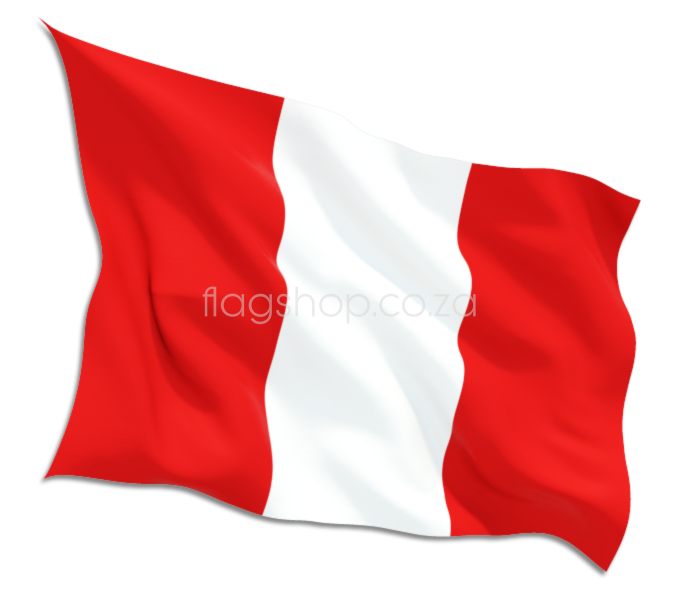
The flag of Peru was adopted by the government of Peru in 1825.
• 90 x 60cm (Storm Size)
• 135 x 90cm (Universal Size)
• 180 x 120cm (Standard Size)
• 270 x 180cm (Ceremonial Size)
• Fitted with header, rope and toggle ready for hoisting
• Material: 100% Polyester Bunting (The Real Flag Material)
• Strikethrough: 97% Ink penetration resulting in a crisp mirror image on the reverse side of the flag
• Reverse Side: Mirror image of front side
Suited for conditions such as intense UV radiation, moist, salty air and high winds.
The average life expectancy of a flag is between 10 and 12 months with normal wear and tear but will differ with fluctuating weather conditions.
Taking care of your flags will prolong the lifespan and keep them looking good.
• Lower your flags at night
• Wash your flags regularly. Dirt can erode fabrics, dull the colours and cause wear
• Inspect your flags for deterioration of stitching and thread and have them repaired
• Expected delivery between 7 to 10 business days
• Free delivery for orders over R1000
The flag of Peru is a vertical triband with red outer bands and a single white middle band. Depending on its use, it may be defaced with different emblems, and has different names. Flag day in Peru is celebrated on June 7, the anniversary of the Battle of Arica.
The Peruvian coat of arms includes the vicuña (a relative of the llama and alpaca), the quina (cinchona) tree, and a cornucopia of gold.
The colour red signifies the blood shed fallen while achieving Peruvian independence. Legend has it that flamingos flying across a white clouded sky from which the inspiration for the colours came. The story goes that inspiration for the flag came when Jose San Martin landed in the southern coastal town of Paracas in 1820 to launch the invasion of Peru and he saw a flock of flamingos take flight. Others say that the white represents peace and the red is the blood from the fighters of their freedom. Wikipedia