
 SUPPLIERS OF QUALITY FLAGS SINCE 2008
SUPPLIERS OF QUALITY FLAGS SINCE 2008
R295
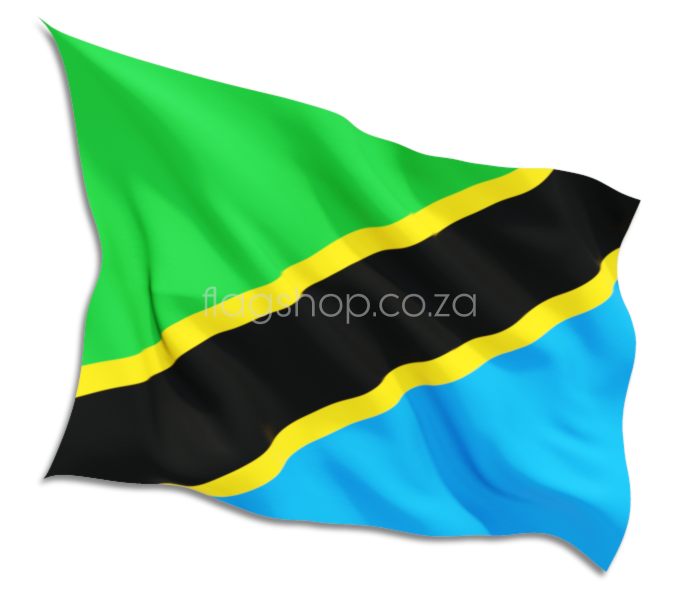
The flag of Tanzania consists of a Yellow-edged black diagonal band, divided diagonally from the lower hoist-side corner, with a green upper triangle and blue lower triangle.
• 90 x 60cm (Storm Size)
• 135 x 90cm (Universal Size)
• 180 x 120cm (Standard Size)
• 270 x 180cm (Ceremonial Size)
• Fitted with header, rope and toggle ready for hoisting
• Material: 100% Polyester Bunting (The Real Flag Material)
• Strikethrough: 97% Ink penetration resulting in a crisp mirror image on the reverse side of the flag
• Reverse Side: Mirror image of front side
Suited for conditions such as intense UV radiation, moist, salty air and high winds.
The average life expectancy of a flag is between 10 and 12 months with normal wear and tear but will differ with fluctuating weather conditions.
Taking care of your flags will prolong the lifespan and keep them looking good.
• Lower your flags at night
• Wash your flags regularly. Dirt can erode fabrics, dull the colours and cause wear
• Inspect your flags for deterioration of stitching and thread and have them repaired
• Expected delivery between 7 to 10 business days
• Free delivery for orders over R1000
Adopted in 1964 to replace the individual flags of Tanganyika and Zanzibar, it has been the flag of the United Republic of Tanzania since the two states merged that year. The design of the present flag incorporates the elements from the two former flags.
The colours and symbols of the flag carry cultural, political, and regional meanings. The green alludes to the natural vegetation and "rich agricultural resources" of the country, while black represents the Swahili people who are native to Tanzania. The blue epitomizes the Indian Ocean, as well as the nation's numerous lakes and rivers. The thin stripes stand for Tanzania's mineral wealth, derived from the "rich deposits" in the land. While Whitney Smith in the Encyclopædia Britannica and Dorling Kindersley's Complete Flags of the World describe the fimbriations as yellow, other sources – such as The World Factbook and Simon Clarke in the journal Azania: Archaeological Research in Africa – contend that it is actually gold. Wikipedia