
 SUPPLIERS OF QUALITY FLAGS SINCE 2008
SUPPLIERS OF QUALITY FLAGS SINCE 2008
R295
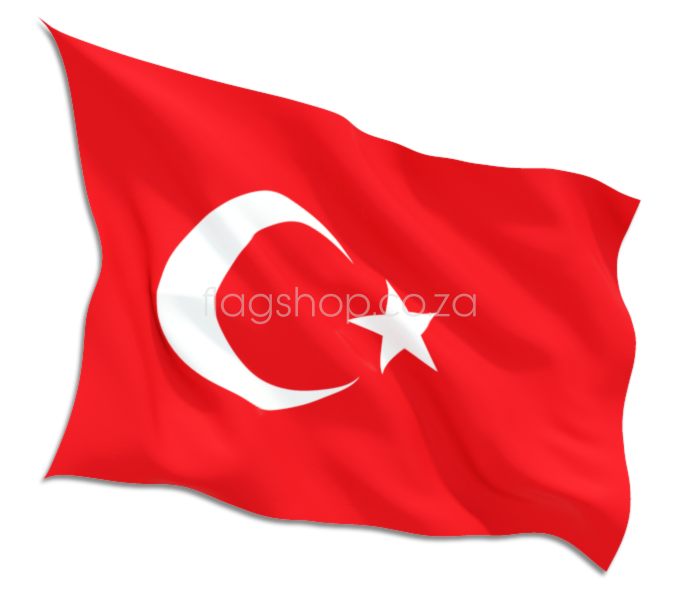
The flag of Turkey (Turkish: Türk bayrağı) is a red flag with a white crescent moon and a star in its centre.
• 90 x 60cm (Storm Size)
• 135 x 90cm (Universal Size)
• 180 x 120cm (Standard Size)
• 270 x 180cm (Ceremonial Size)
• Fitted with header, rope and toggle ready for hoisting
• Material: 100% Polyester Bunting (The Real Flag Material)
• Strikethrough: 97% Ink penetration resulting in a crisp mirror image on the reverse side of the flag
• Reverse Side: Mirror image of front side
Suited for conditions such as intense UV radiation, moist, salty air and high winds.
The average life expectancy of a flag is between 10 and 12 months with normal wear and tear but will differ with fluctuating weather conditions.
Taking care of your flags will prolong the lifespan and keep them looking good.
• Lower your flags at night
• Wash your flags regularly. Dirt can erode fabrics, dull the colours and cause wear
• Inspect your flags for deterioration of stitching and thread and have them repaired
• Expected delivery between 7 to 10 business days
• Free delivery for orders over R1000
The flag of Turkey is called Ayyıldız (moon-star) or Albayrak (red flag). The Turkish flag is referred to as Alsancak (red banner) in the Turkish National Anthem.
The star and the moon are two sky elements symbolizing the Tengrist beliefs of the sky-worshiping ancient Turks. In Turkic Mythology four colours are associated with four cardinal directions such as “gok-blue” (east), “aq-white” (west), “al-red” (south) and “qara-black” (north). These colors represent the direction towards the zenith where the Tengri is residing in the sky. Red and white colours on the flag of Turkey symbolize the south-western branch of Turks called Oghuzes who are the founders of present-day Turkey as well as Azerbaijan, Turkmenistan and Gagauzia. Same mythology gives the Turkic names of the Black Sea and Mediterranean; Karadeniz being in the north and Akdeniz being in the west respectively. Turkestan’s flag is similar to Turkey’s, with only difference being blue.
The flag uses the same symbols of the former Ottoman flag, adopted in 1844 with the Tanzimat reforms, but the shape, placement and shade of the colour vary. The geometric proportions of the flag were legally standardised with the Turkish Flag Law in 1936. Wikipedia