
 SUPPLIERS OF QUALITY FLAGS SINCE 2008
SUPPLIERS OF QUALITY FLAGS SINCE 2008
R295
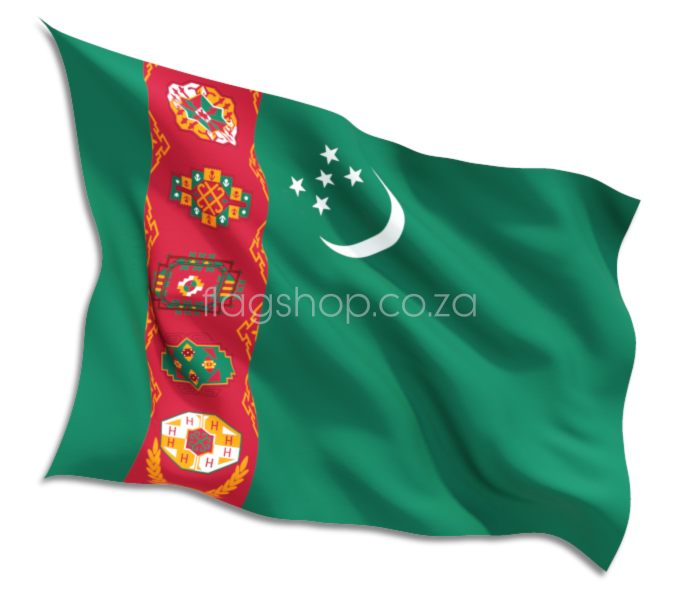
The flag of Turkmenistan (Turkmen: Türkmenistanyň baýdagy) was adopted on January 24, 2001.
• 90 x 60cm (Storm Size)
• 135 x 90cm (Universal Size)
• 180 x 120cm (Standard Size)
• 270 x 180cm (Ceremonial Size)
• Fitted with header, rope and toggle ready for hoisting
• Material: 100% Polyester Bunting (The Real Flag Material)
• Strikethrough: 97% Ink penetration resulting in a crisp mirror image on the reverse side of the flag
• Reverse Side: Mirror image of front side
Suited for conditions such as intense UV radiation, moist, salty air and high winds.
The average life expectancy of a flag is between 10 and 12 months with normal wear and tear but will differ with fluctuating weather conditions.
Taking care of your flags will prolong the lifespan and keep them looking good.
• Lower your flags at night
• Wash your flags regularly. Dirt can erode fabrics, dull the colours and cause wear
• Inspect your flags for deterioration of stitching and thread and have them repaired
• Expected delivery between 7 to 10 business days
• Free delivery for orders over R1000
The Turkmenistan flag features a green field with a vertical red stripe near the hoist side, containing five carpet guls (designs used in producing rugs) stacked above two crossed olive branches similar to those on the flag of the United Nations; a white waxing crescent moon, typical of Turkic symbology, and five white five-pointed stars appear in the upper corner of the field just to the fly side of the red stripe.
The green and red colours appear in this flag because they have been venerated historically by the Turkmen. The waxing crescent moon symbolizes the hope of the country for a shining future and the stars represent the five provinces (welayatlar) of Turkmenistan – Ahal, Balkan, Dashhowuz, Lebap, and Mary.
The five traditional carpet designs along the hoist represent the five major tribes or houses, and form motifs in the country’s state emblem and flag. These Turkmen tribes in traditional order (as well as top to bottom) are Teke (Tekke), Yomut (Yomud), Saryk (Saryq), Chowdur (Choudur), and Arsary (Ersary). The middle design may also represent the Salyr (Salor), a tribe that declined as a result of military defeat before the modern period.
The wreath is one of the odder parts of the flag, added against the rules of heraldry and breaking up the carpet pattern. It was added as an afterthought to represent the “status of permanent neutrality,” which was accepted by the United Nations General Assembly on December 12, 1995.
Before independence from the Soviet Union in 1991, Turkmenistan had a flag similar to all other Soviet Republics; see Flag of the Turkmen SSR. After independence in 1991, Turkmenistan adopted a flag very similar to the current design, on February 19, 1992. However, the designs on the left were different. In 1997, the designs changed again before becoming the current versions in 2001. Wikipedia