
 SUPPLIERS OF QUALITY FLAGS SINCE 2008
SUPPLIERS OF QUALITY FLAGS SINCE 2008
R295
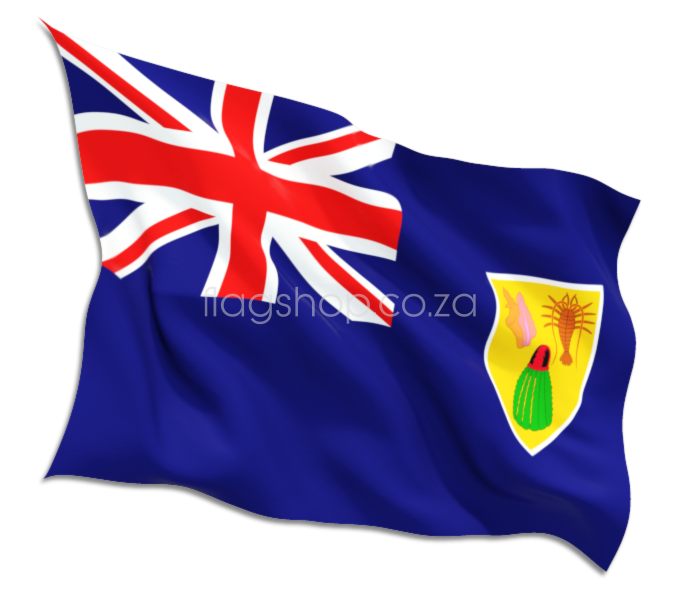
The current flag of the Turks and Caicos Islands was adopted on 7 November 1968, and modified in 1999. Prior to this, the islands had several different flags either proposed or utilised.
• 90 x 60cm (Storm Size)
• 135 x 90cm (Universal Size)
• 180 x 120cm (Standard Size)
• 270 x 180cm (Ceremonial Size)
• Fitted with header, rope and toggle ready for hoisting
• Material: 100% Polyester Bunting (The Real Flag Material)
• Strikethrough: 97% Ink penetration resulting in a crisp mirror image on the reverse side of the flag
• Reverse Side: Mirror image of front side
Suited for conditions such as intense UV radiation, moist, salty air and high winds.
The average life expectancy of a flag is between 10 and 12 months with normal wear and tear but will differ with fluctuating weather conditions.
Taking care of your flags will prolong the lifespan and keep them looking good.
• Lower your flags at night
• Wash your flags regularly. Dirt can erode fabrics, dull the colours and cause wear
• Inspect your flags for deterioration of stitching and thread and have them repaired
• Expected delivery between 7 to 10 business days
• Free delivery for orders over R1000
Nevertheless, the Turks and Caicos Islands did not form a separate colony for the vast majority of this time. Instead, the islands were a dependency of Jamaica until 1959. In 1959, the islands became a separate colony but until 1962 and the independence of Jamaica, the Governor of Jamaica remained the Governor of the Turks and Caicos Islands. Between 1962 and 1965 the Administrator of the Turks and Caicos Islands reported directly to London and then between 1965 and 1973, the administrator was subordinate to the Governor of the Bahamas, who was also Governor of the Turks and Caicos Islands. In 1973, when The Bahamas became independent, the position of administrator became governor. Wikipedia