
 SUPPLIERS OF QUALITY FLAGS SINCE 2008
SUPPLIERS OF QUALITY FLAGS SINCE 2008
R295
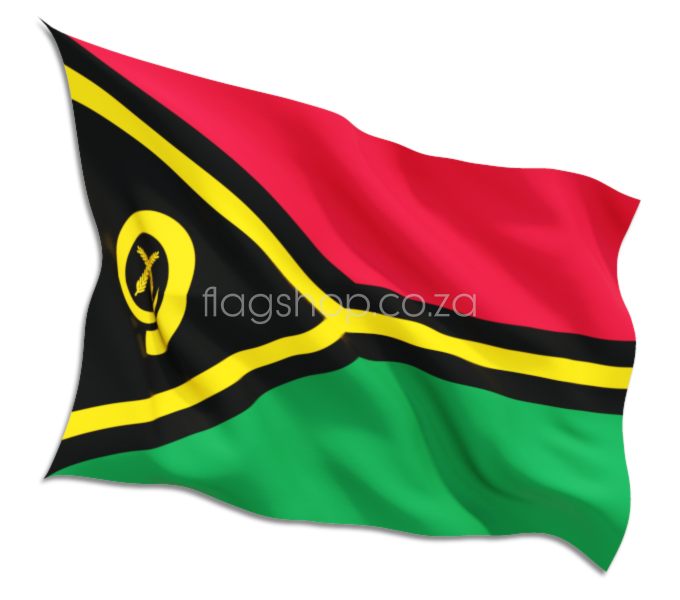
The flag of Vanuatu was adopted on February 13, 1980.
• 90 x 60cm (Storm Size)
• 135 x 90cm (Universal Size)
• 180 x 120cm (Standard Size)
• 270 x 180cm (Ceremonial Size)
• Fitted with header, rope and toggle ready for hoisting
• Material: 100% Polyester Bunting (The Real Flag Material)
• Strikethrough: 97% Ink penetration resulting in a crisp mirror image on the reverse side of the flag
• Reverse Side: Mirror image of front side
Suited for conditions such as intense UV radiation, moist, salty air and high winds.
The average life expectancy of a flag is between 10 and 12 months with normal wear and tear but will differ with fluctuating weather conditions.
Taking care of your flags will prolong the lifespan and keep them looking good.
• Lower your flags at night
• Wash your flags regularly. Dirt can erode fabrics, dull the colours and cause wear
• Inspect your flags for deterioration of stitching and thread and have them repaired
• Expected delivery between 7 to 10 business days
• Free delivery for orders over R1000
When the Vanua’aku Party led the country to independence as Vanuatu in 1980, the colours of the party flag – red, green, black and yellow – were chosen to be the basis for the national flag of Vanuatu. A parliamentary committee chose the final design based on submissions from local artists.
The green represents the richness of the islands, the red is symbolic of the blood of boars and men, and the black of the ni-Vanuatu people. Vanuatu’s Prime Minister requested the inclusion of yellow and black fimbriations to make the black stand out. The yellow Y-shape represents the light of the Gospel going through the pattern of the islands in the Pacific Ocean (Vanuatu is approximately 90% Christian).
The emblem in the black is a boar’s tusk – the symbol of prosperity worn as a pendant on the islands – along with two leaves of the local namely fern. The leaves are supposed to be a token of peace, and their 39 fronds represent the 39 members of Vanuatu’s legislative assembly. Wikipedia