
 SUPPLIERS OF QUALITY FLAGS SINCE 2008
SUPPLIERS OF QUALITY FLAGS SINCE 2008
R325
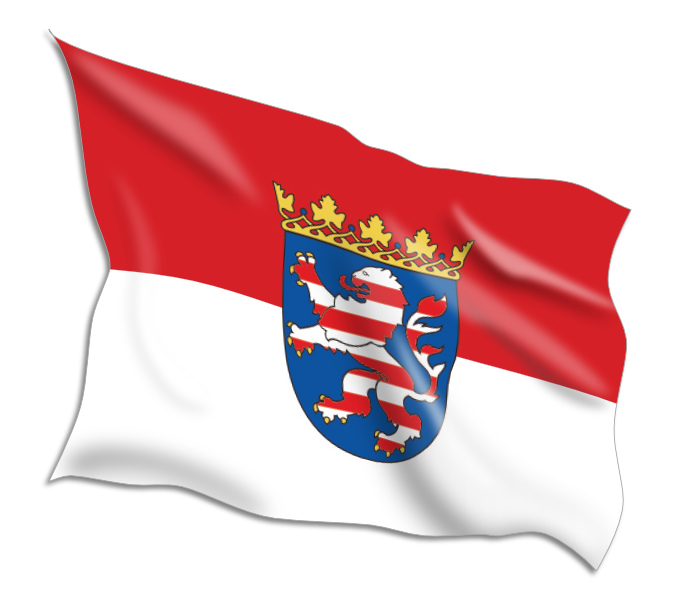
The civil flag of Hesse consists of a bicolour of a red top and a bottom white stripe. The state flag is similar, except it is defaced with the state coat of arms in the centre, and may only be used by government departments and services.
• 90 x 60cm (Storm Size)
• 135 x 90cm (Universal Size)
• 180 x 120cm (Standard Size)
• 270 x 180cm (Ceremonial Size)
• Fitted with header, rope and toggle ready for hoisting
• Material: 100% Polyester Bunting (The Real Flag Material)
• Strikethrough: 97% Ink penetration resulting in a crisp mirror image on the reverse side of the flag
• Reverse Side: Mirror image of front side
Suited for conditions such as intense UV radiation, moist, salty air and high winds.
The average life expectancy of a flag is between 10 and 12 months with normal wear and tear but will differ with fluctuating weather conditions.
Taking care of your flags will prolong the lifespan and keep them looking good.
• Lower your flags at night
• Wash your flags regularly. Dirt can erode fabrics, dull the colours and cause wear
• Inspect your flags for deterioration of stitching and thread and have them repaired
• Expected delivery between 7 to 10 business days
• Free delivery for orders over R1000
The civil flag of Hesse resembles that of Monaco's and, particularly, Indonesia's.
The colours red and white are based on that of the Ludovingian coat of arms, showing a lion with a nine fold horizontal white and red division. The coat of arms was inherited by the House of Hesse upon its split from the Duchy of Thuringia in 1247, and the flag came into use in the early modern Landgraviate of Hesse; the modern Grand Duchy of Hesse used a flag with two red stripes, as did the People's State of Hesse until 1933.
The flag of Thuringia was introduced in 1920, with its formation out of the fragmented Thuringian states (the Duchy of Thuringia had been absorbed into Saxony in 1400), as the reverse of the flag of Hesse.