
 SUPPLIERS OF QUALITY FLAGS SINCE 2008
SUPPLIERS OF QUALITY FLAGS SINCE 2008
R325
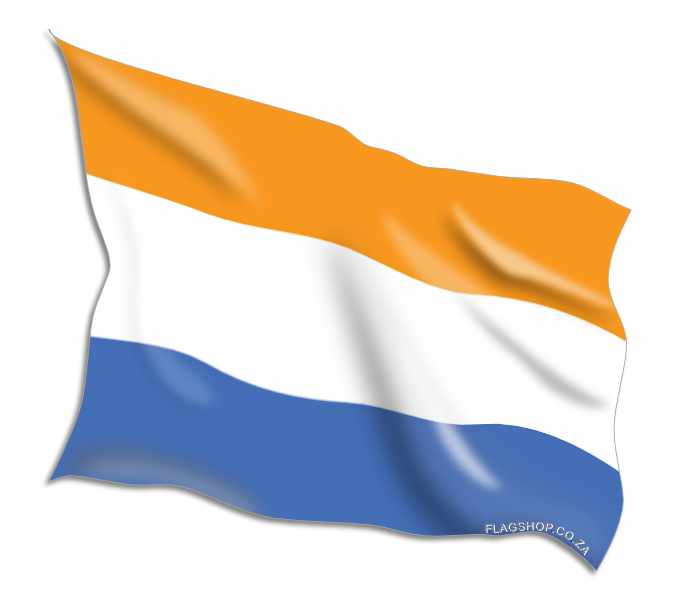
The Prince's Flag (Dutch: Prinsenvlag) is a Dutch flag, first used in the Dutch Revolt during the late 16th century.
• 90 x 60cm (Storm Size)
• 135 x 90cm (Universal Size)
• 180 x 120cm (Standard Size)
• 270 x 180cm (Ceremonial Size)
• Fitted with header, rope and toggle ready for hoisting
• Material: 100% Polyester Bunting (The Real Flag Material)
• Strikethrough: 97% Ink penetration resulting in a crisp mirror image on the reverse side of the flag
• Reverse Side: Mirror image of front side
Suited for conditions such as intense UV radiation, moist, salty air and high winds.
The average life expectancy of a flag is between 10 and 12 months with normal wear and tear but will differ with fluctuating weather conditions.
Taking care of your flags will prolong the lifespan and keep them looking good.
• Lower your flags at night
• Wash your flags regularly. Dirt can erode fabrics, dull the colours and cause wear
• Inspect your flags for deterioration of stitching and thread and have them repaired
• Expected delivery between 7 to 10 business days
• Free delivery for orders over R1000
The Prince's Flag is based on the Flag of Prince William of Orange-Nassau, hence the name. The colours are orange, white and blue. On the basis of the French names of these colours, orange-blanc-bleu, the flag is also referred to by the Dutch rhymes oranje-blanje-bleu and ranje-blanje-bleu.
This flag is controversial in the Netherlands due to its usage in the past by the NSB. The flag is now mostly used in the Netherlands by far right activists and in historical re-enactment in equivalence to the usage of the Confederate battle flag in the United States.
In 1647 the Dutch East Indiaman Nieuwe Haerlem, was blown ashore in Table Bay and became ship wrecked. Some of the crew survived and a year later were rescued by a returning trading fleet and returned to the Netherlands. The leader of the survivors wrote to the Directors of the Dutch East India Company and pleaded for the establishment of a refreshment station and fort at the Cape. As a result, three trading ships under the command of Jan van Riebeeck anchored in Table Bay on 05 April 1652. On the following morning van Riebeeck stepped ashore and proclaimed the territory surround the Bay to be henceforth the property of the Company, which led to the establishment of a permanent European settlement at the Cape.
Although van Riebeeck made no mention of hoisting a flag, the Dutch and company flags were flown on the ships of the Dutch East India Company. The Dutch flag at that time was three horizontal stripes of orange, white and blue or Princevlag. Later the top stripe became red, and these are still the colours of the Dutch flag today.