
 SUPPLIERS OF QUALITY FLAGS SINCE 2008
SUPPLIERS OF QUALITY FLAGS SINCE 2008
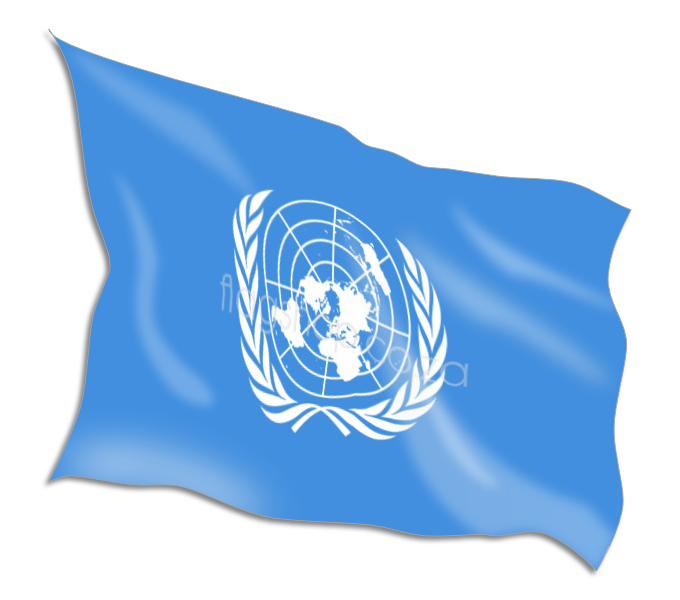
R325
The flag of the United Nations was adopted on December 7, 1946, and consists of the official emblem of the United Nations in white on a blue background.
• 90 x 60cm (Storm Size)
• 135 x 90cm (Universal Size)
• 180 x 120cm (Standard Size)
• 270 x 180cm (Ceremonial Size)
• Fitted with header, rope and toggle ready for hoisting
• Material: 100% Polyester Bunting (The Real Flag Material)
• Strikethrough: 97% Ink penetration resulting in a crisp mirror image on the reverse side of the flag
• Reverse Side: Mirror image of front side
Suited for conditions such as intense UV radiation, moist, salty air and high winds.
The average life expectancy of a flag is between 10 and 12 months with normal wear and tear but will differ with fluctuating weather conditions.
Taking care of your flags will prolong the lifespan and keep them looking good.
• Lower your flags at night
• Wash your flags regularly. Dirt can erode fabrics, dull the colours and cause wear
• Inspect your flags for deterioration of stitching and thread and have them repaired
• Expected delivery between 7 to 10 business days
• Free delivery for orders over R1000
The blue that appears in the background of the insignia was chosen to be "the opposite of red, the war colour", although the exact shade has never been officially specified by the United Nations. The original colour the group chose in 1945 was a gray blue that differs from the current United Nations flag. The globe used in the original design was an azimuthal projection focused on the North Pole with the United States, the host nation of the conference, at the centre. The projection that was used cut off portions of the Southern Hemisphere at the latitude of Argentina, which was acceptable at the time, as Argentina was not planned to be an original member of the United Nations. The projection was later altered so that no country will be at prominence within the flag. The new logo was now designed so that the globe is bisected in the centre by the Prime Meridian and the International Date Line. Wikipedia