
 SUPPLIERS OF QUALITY FLAGS SINCE 2008
SUPPLIERS OF QUALITY FLAGS SINCE 2008
R325
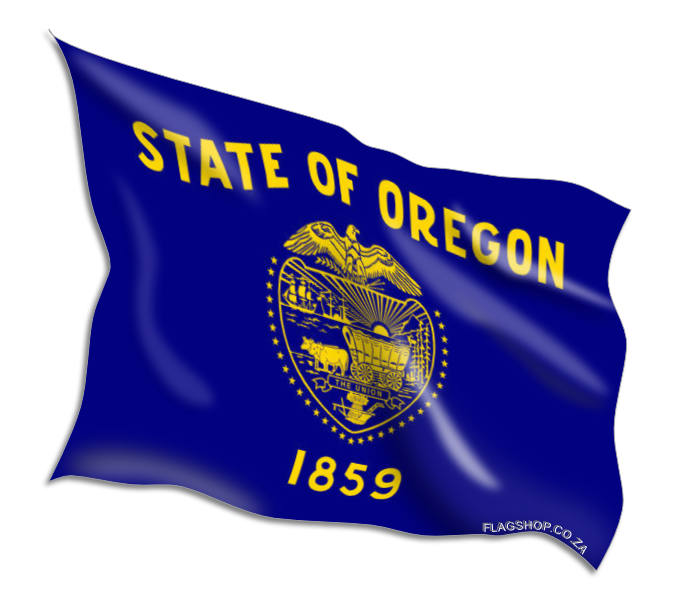
Oregon is a state in the Pacific Northwest of the United States.
• 90 x 60cm (Storm Size)
• 135 x 90cm (Universal Size)
• 180 x 120cm (Standard Size)
• 270 x 180cm (Ceremonial Size)
• Fitted with header, rope and toggle ready for hoisting
• Material: 100% Polyester Bunting (The Real Flag Material)
• Strikethrough: 97% Ink penetration resulting in a crisp mirror image on the reverse side of the flag
• Reverse Side: Mirror image of front side
Suited for conditions such as intense UV radiation, moist, salty air and high winds.
The average life expectancy of a flag is between 10 and 12 months with normal wear and tear but will differ with fluctuating weather conditions.
Taking care of your flags will prolong the lifespan and keep them looking good.
• Lower your flags at night
• Wash your flags regularly. Dirt can erode fabrics, dull the colours and cause wear
• Inspect your flags for deterioration of stitching and thread and have them repaired
• Expected delivery between 7 to 10 business days
• Free delivery for orders over R1000
It is bordered on its west by the Pacific Ocean, on its north by Washington, on its south by California, on its east by Idaho, and on its southeast by Nevada. The Columbia River delineates much of Oregon's northern boundary, and the Snake River delineates much of the eastern boundary. It is one of only three states of the contiguous United States to have a coastline on the Pacific Ocean.
Oregon was inhabited by many indigenous tribes before traders, explorers, and settlers arrived. An autonomous government was formed in the Oregon Country in 1843, the Oregon Territory was created in 1848, and Oregon became the 33rd state on February 14, 1859. Today, Oregon is the 9th largest and 27th most populous U.S. state. Its capital is Salem, the second most populous of its cities, with 160,614 residents (2013 estimate). With 609,456 residents (2013 estimate), Portland is the largest city in Oregon and ranks 29th in the U.S. Its metro population of 2,262,605 (2011 estimate) is 23rd. The Willamette Valley in western Oregon is the state's most densely populated area, home to eight of the ten most populous cities.
Oregon's landscape is diverse, with a windswept Pacific coastline, volcano-studded Cascade Range, abundant waterfalls, dense evergreen forests, mixed forests, and deciduous forests at lower elevations, and high desert sprawling across much of its east all the way to the Great Basin. The tall Douglas firs and redwoods along its rainy west coast contrast with the lighter timbered and fire-prone pine and juniper forests covering portions to the east. Abundant alders in the west fix nitrogen for the conifers; aspen groves are common in the east. Stretching east from central Oregon are semi-arid shrublands, prairies, deserts, steppes, and meadows. At 11,249 feet (3,429 m), Mount Hood is the state high point, and Crater Lake National Park is its only national park.